Why Does AI Cite Some Websites and Not Others?
AI assistants cite a page when three things are true at once: the page is retrievable (crawlable, indexed, and eligible to be shown with a snippet), it is relevant to one of the sub-queries the system generated, and it contains a passage that can be lifted out and stand on its own. Everything else in the published research is a refinement of those three. The strongest single predictor across the evidence is still ordinary search ranking — Zyppy's May 2026 meta-analysis of 54 studies scored it 9.4 out of 10, higher than any other factor [10]. The most actionable is position within the page: 44.2% of all LLM citations are extracted from the first 30% of a document [11]. And the most over-claimed is structured data, which Google says is not required for its AI features at all [2] and which was absent from every one of 49 measured cited pages in first-party research [31]. This page assembles what the evidence actually supports, what it contradicts, and where it runs out.
How to read this page
This is an evidence review, not a tactics list, and it is organised so you can disagree with the conclusions while keeping the data.
Three things worth knowing before you start:
Most published figures are vendor research. The people measuring AI citations mostly sell AI-visibility tools. That does not make the numbers wrong, but it does mean the questions asked tend to be questions with commercially useful answers. Where a figure comes from a peer-reviewed source, this page says so.
The field is about eighteen months old and the numbers disagree. Two reputable houses currently publish top-10-organic citation shares of 38% and 17% for the same broad phenomenon [9][14]. When credible sources disagree by a factor of two, the honest move is to show both rather than pick the one that suits the argument.
Correlation is doing most of the work. Almost none of this is causal. The exceptions are the controlled experiments, and they are the smallest part of the literature — and the one that most often contradicts the correlational advice.
Six ways this goes wrong that have nothing to do with content
Before rewriting anything, rule these out. Each is common, each produces exactly the same symptom - zero citations - and none of them is fixed by better writing.
A bot rule you have forgotten about. Google's stated requirement is that the page be indexed and eligible to be shown with a snippet, and that crawling be allowed in robots.txt and by any CDN or hosting infrastructure [2]. That second clause catches people. A bot-management rule added during a scraping incident, or a hosting default that blocks unfamiliar user agents, will silently exclude you from every retrieval system while leaving your Google rankings intact.
A nosnippet directive. Zyppy scores preview control at 9.2 out of 10, and notes that pages using nosnippet to suppress preview snippets can inadvertently reduce or eliminate AI citation visibility, because engines lean on snippet data during grounding [10]. Google confirms nosnippet, data-nosnippet, max-snippet and noindex are the controls that limit what is shown from a page [2]. Someone added one of these for a good reason years ago. Check.
Client-side rendering. Google processes JavaScript in three phases — crawling, rendering, indexing — with rendering deferred until resources allow [27]. Many non-Google retrieval crawlers execute far less JavaScript than Googlebot. Fetch your own page with JavaScript disabled; whatever is missing is content a meaningful share of machine readers never see.
The page is new. Google notes it may take several days after publishing for a page to be found and crawled [1], and the retrieval layers behind assistants sit downstream of indexing. Weeks, not hours.
You are measuring one engine and concluding about all of them. Semrush found only 36 brands maintained top-100 visibility across all four major platforms [15]. Absence from one is unremarkable.
You are measuring inconsistently. Asking an assistant a slightly different question each week and comparing the answers measures your phrasing, not your visibility. This is the single most common self-inflicted error, and it is why a frozen question set matters more than any individual tactic on this page.
The short answer, in mechanism terms
Before the studies, the plumbing - because most "why wasn't I cited" questions resolve at this level.
An AI assistant answering a question with citations is generally doing retrieval-augmented generation. It takes your question, turns it into one or more searches, retrieves a set of candidate documents, and generates an answer grounded in what it retrieved, attaching citations to the sources it leaned on.
Google confirms its AI features may use a query fan-out technique, issuing multiple related searches across subtopics and data sources — and says this lets it display a wider and more diverse set of links than a classic web search [2]. That single mechanism explains a great deal. You are not competing for one query; you are competing across a spray of related sub-queries, most of which you will never see.
It also explains why coverage beats brilliance. A page that ranks for one exact phrase enters one bucket. A cluster that ranks across twenty related phrasings enters twenty. Zyppy scores query fan-out rank at 9.3 and topic-cluster ranking at 8.9, the highest content-strategy signal in its analysis [10].
Google's stated technical requirement for appearing in AI Overviews or AI Mode is narrow: the page must be indexed and eligible to be shown in Search with a snippet, and there are no additional technical requirements [2]. Crawling must be permitted in robots.txt and by any CDN or hosting layer in front of the site [2].
That last clause is worth pausing on, because it is the most common silent cause of zero citations. If a bot-management rule added years ago is refusing AI crawlers, no amount of content work will help.
What the controlled experiments show
The founding academic work is GEO: Generative Engine Optimization, presented at KDD 2024 by researchers from Princeton and collaborators [6]. It matters because it is one of the very few places where someone changed a page, held everything else constant, and measured what happened.
The study introduced GEO-bench, roughly 10,000 queries across nine datasets, and tested nine content modifications. The headline is that GEO methods can boost visibility in generative engine responses by up to 40% [6].
That figure is quoted constantly and almost always wrong. 40% is a maximum, not an average. The three strongest methods produced 30–40% relative improvement on the Position-Adjusted Word Count metric and 15–30% on Subjective Impression [6]. Those three were:
Statistics Addition — replacing qualitative claims with specific figures
Quotation Addition — incorporating credible quotes
Cite Sources — citing reliable sources for claims
There is a pleasing irony in the third. Citing other people's work makes you more likely to be cited. It reads as a leak of authority and behaves as a signal of it.
The mechanism is not mysterious once you think about what a grounding system is doing. A page dense with attributed figures is a page where claims can be checked and lifted with their provenance intact. A page of confident unsourced assertion offers nothing that survives extraction — quote it and you have quoted an opinion. Program research found cited pages carried a median of 11 external links [31], which is consistent: cited pages cite.
There is a practical corollary that many marketing teams resist. Outbound links to authoritative sources are not leakage to be minimised. On the available evidence they are part of what makes a page citable in the first place.
Two further findings deserve more attention than they get. Keyword stuffing performed worse than baseline [6] — a traditional SEO tactic actively harming performance in generative contexts. And efficacy varied by domain [6], which means a technique that worked in one vertical is not guaranteed to transfer.
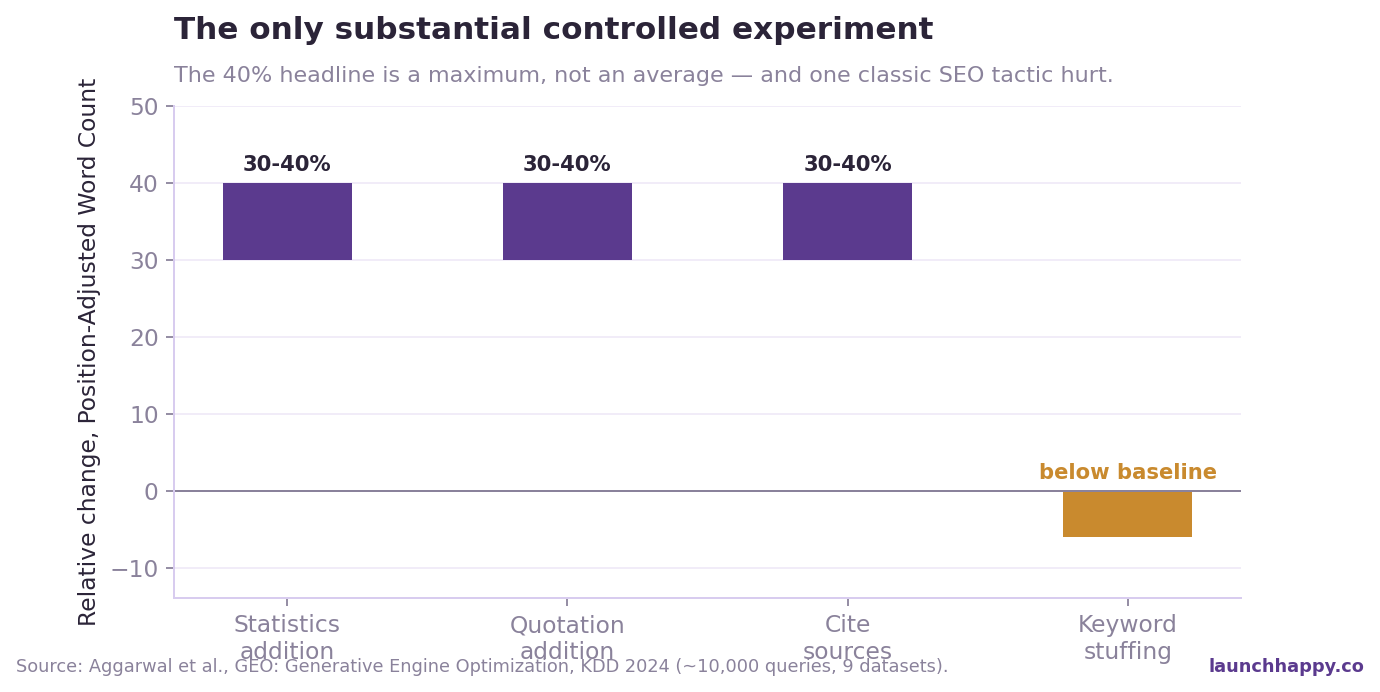
Figure 1: The only substantial controlled experiment
The corrective nobody quotes
The GEO paper is usually cited alone. It should not be.
C-SEO Bench is the first systematic benchmark of conversational-SEO tactics, and its finding is blunt: most such tactics do not help, several actively hurt, and plain source relevance keeps working [7].
Read together, the two papers say something more useful than either alone. Improving the source works. Gaming the response does not. Adding a real statistic makes the page better and gets rewarded. Adding a manipulation makes the page worse and gets punished or ignored. The distinction is not about which tactic you pick; it is about whether the change would survive a reader noticing it.
If you take one thing from the experimental literature, take that.
Where on the page citations come from
This is the finding with the highest ratio of importance to awareness.
Zyppy and Authoritas found that 44.2% of all LLM citations are extracted from the first 30% of a document [11]. Nearly half of all citation value sits in the opening third.
The implication is structural rather than stylistic. The classic article shape — context, background, build-up, then the answer around the two-thirds mark — is close to worst-case. If the answer is in section four, a system extracting from the opening third never reaches it.
This is not a tip about writing punchy introductions. It is a claim about where extraction happens, and it argues for inverting the standard structure: answer in the first paragraph, then explain.
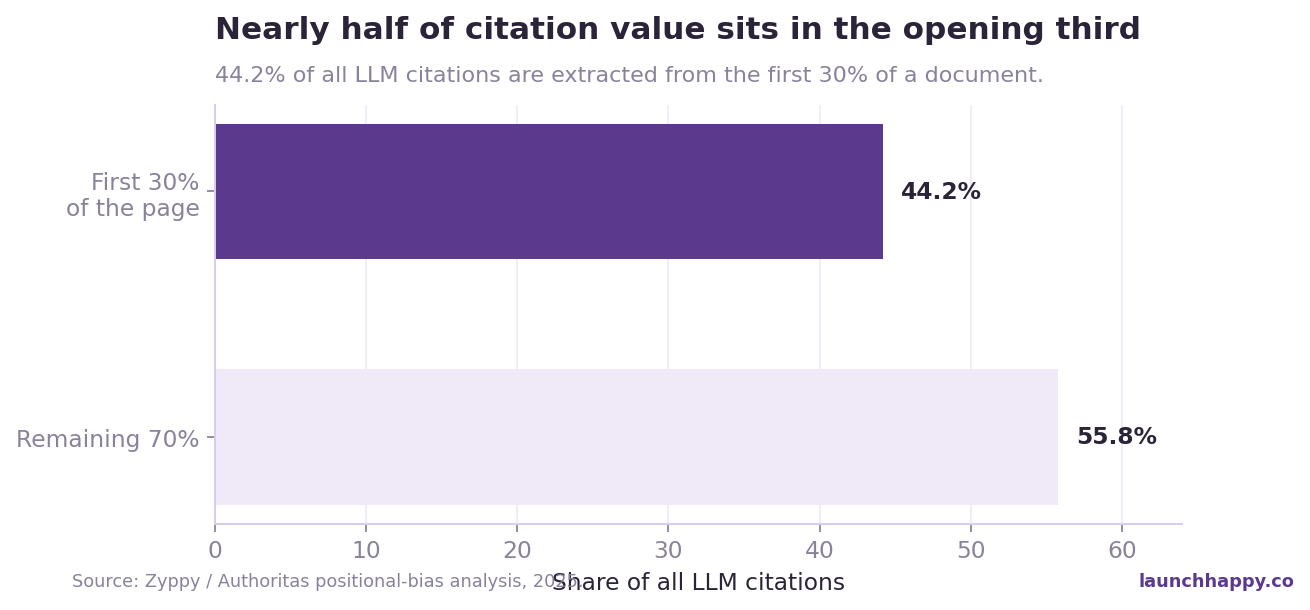
Figure 2: Nearly half of citation value sits in the opening third
Passage-level, not page-level
The related finding is that AI systems increasingly cite a passage, not a page.
In the LaunchHappy Panel B measurement — 25 frozen GEO-category questions across four AI platforms, three runs each, for 300 measured answers — 2,026 cited references were logged. 32.5% of them were passage-level deep links using the #:~:text= URL fragment syntax [32]. That syntax points a browser at one exact quoted string. When an assistant emits it, it is not saying "this page is relevant." It is saying "this sentence answered the question."
A third of citations operating at sentence granularity changes what a well-optimised page looks like. It is not one long argument. It is a sequence of self-contained answer blocks, each of which survives being lifted out of context.
The practical form: a question-shaped heading, followed immediately by a 40-to-80-word answer that makes sense with nothing around it, followed by the depth. Repeat.
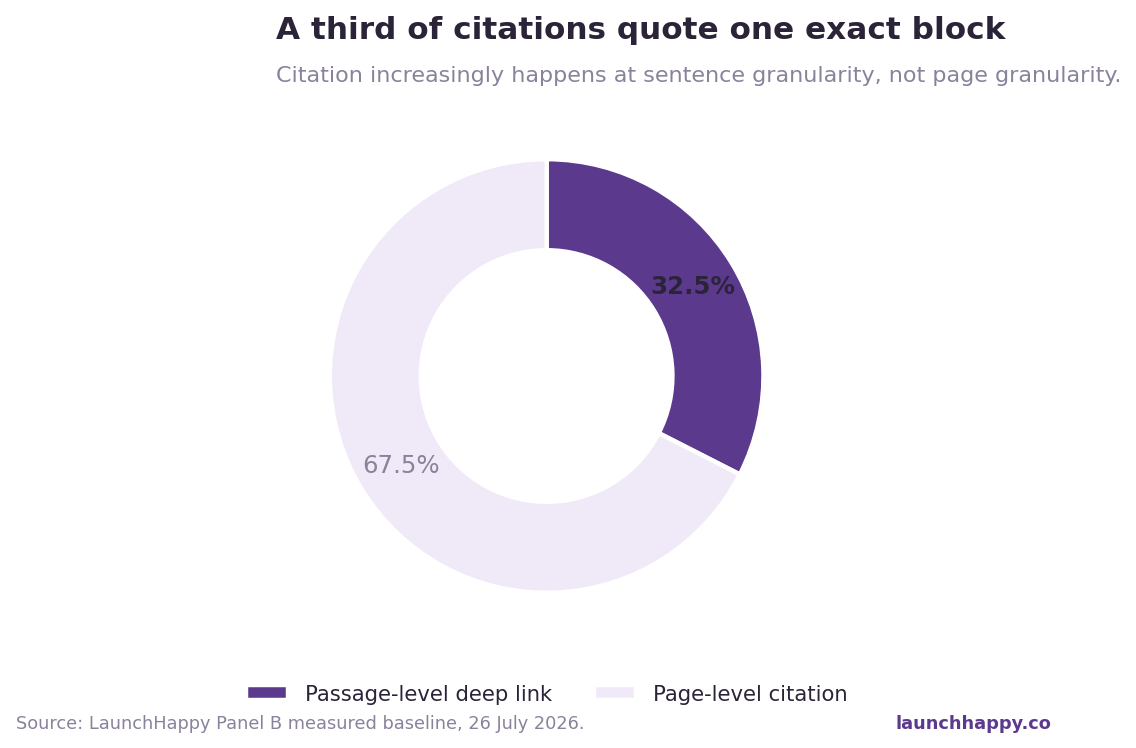
Figure 3: A third of citations quote one exact block
The test for whether a block is extractable is mechanical: cut it out, paste it somewhere else, and read it cold. If it contains "as we saw above", "this approach", "the second option" or any other pointer to context you just removed, it is not extractable. Those phrases are invisible to a human reading top to bottom and fatal to a passage being quoted alone.
This also explains an otherwise puzzling finding from the program's five-entity-type model, where cited pages carried only 61 to 91 extractable words each [31]. The winning unit was not the page and not the section. It was roughly a paragraph — which is about as much text as an assistant can comfortably quote inside a generated answer.
Does length matter? The clearest contradiction in the field
Here is where the evidence genuinely conflicts, and where most content on this topic quietly picks a side.
The case that length does not matter. Ahrefs analysed 174,048 pages and 560,346 AI Overviews in December 2025 and found a Spearman correlation between word count and citation position of approximately 0.04 — essentially zero [8]. The average length of AI-Overview-cited content was 1,282 words. 53.4% of cited pages were under 1,000 words — 16.6% under 350, 36.8% between 350 and 1,000 — and pages over 2,000 words accounted for only about 16% of citations [8].
The case that depth matters. In LaunchHappy program research, 49 pages that had genuinely earned AI citations were fully parameterised. Their mean length was 5,247 words and their median 4,467, with a median of 8 H2s, 14 images, 54 internal links and 11 external links [31].
These are not compatible on their face. One says cited pages are short; the other says cited pages are long.
The most likely reconciliation is that they are measuring different populations. Ahrefs measured AI Overviews broadly, across every query type — including the enormous volume of simple factual questions where a 300-word page is the correct answer. The program research measured a specific competitive commercial category, where the pages competing were uniformly substantial. Length is probably not a signal in itself; it is correlated with the coverage that wins in competitive categories, and uncorrelated with anything in simple ones.
The honest conclusion: do not write long for its own sake. Write until the question is fully answered, and expect that in a contested commercial topic that will be long, because your competitors have already covered the obvious ground. In a simple factual topic, 400 words that answer precisely will beat 4,000 that bury the answer.
There is a second reconciliation worth noting, because it changes what "long" should mean in practice. If a third of citations are passage-level [32] and 44.2% come from the opening third [11], then a long page is not being read as a long page. It is being mined for one good block. Length helps only insofar as it adds more distinct answerable questions to the page — more headings that match more sub-queries in the fan-out. Length that adds elaboration to an existing point adds nothing extractable and may push the good block further down.
The distinction is between a page that is long because it covers ten questions and a page that is long because it says one thing slowly. The first is what the depth benchmark is really capturing. The second is what the null result is really punishing.
Anyone telling you word count is a ranking factor for AI citation is over-reading correlational data. Anyone telling you length never matters is ignoring what competitive categories actually look like.
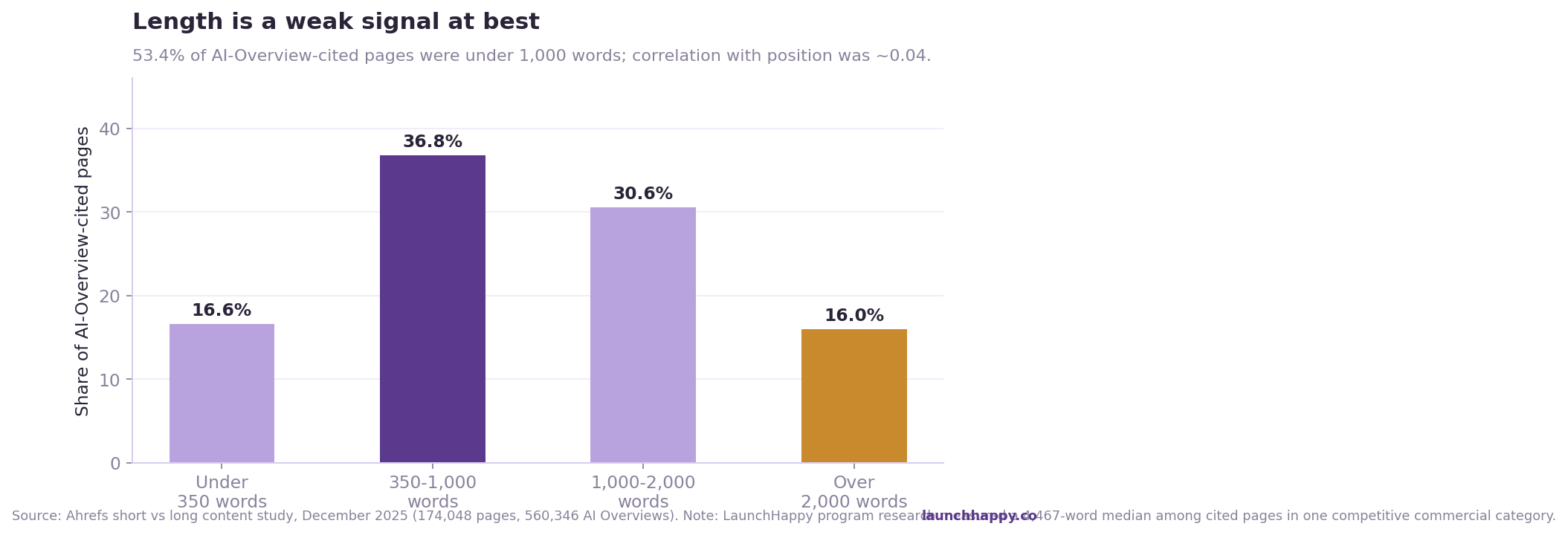
Figure 4: Length is a weak signal at best
What cited pages have in common
If length is a weak signal, shape is a strong one.
In the Panel B measurement, 86.3% of the 2,026 cited references pointed to pages whose title or slug restated the query [32]. That is the largest single pattern in the dataset by a wide margin, and it holds across all four platforms measured.
Classifying those cited references by page shape produces a consistent hierarchy [32]:
Shape
Share of cited references
Query-mirroring topic page
53.9%
Question-titled answer page
32.4%
Comparison / vs page
4.0%
Entity-definition page
2.8%
Conversion / provider page
2.7%
FAQ hub
2.5%
Buyer / ROI guide
1.7%
The top two — together 86.3% — are the same underlying thing: the page's title says what the query says.
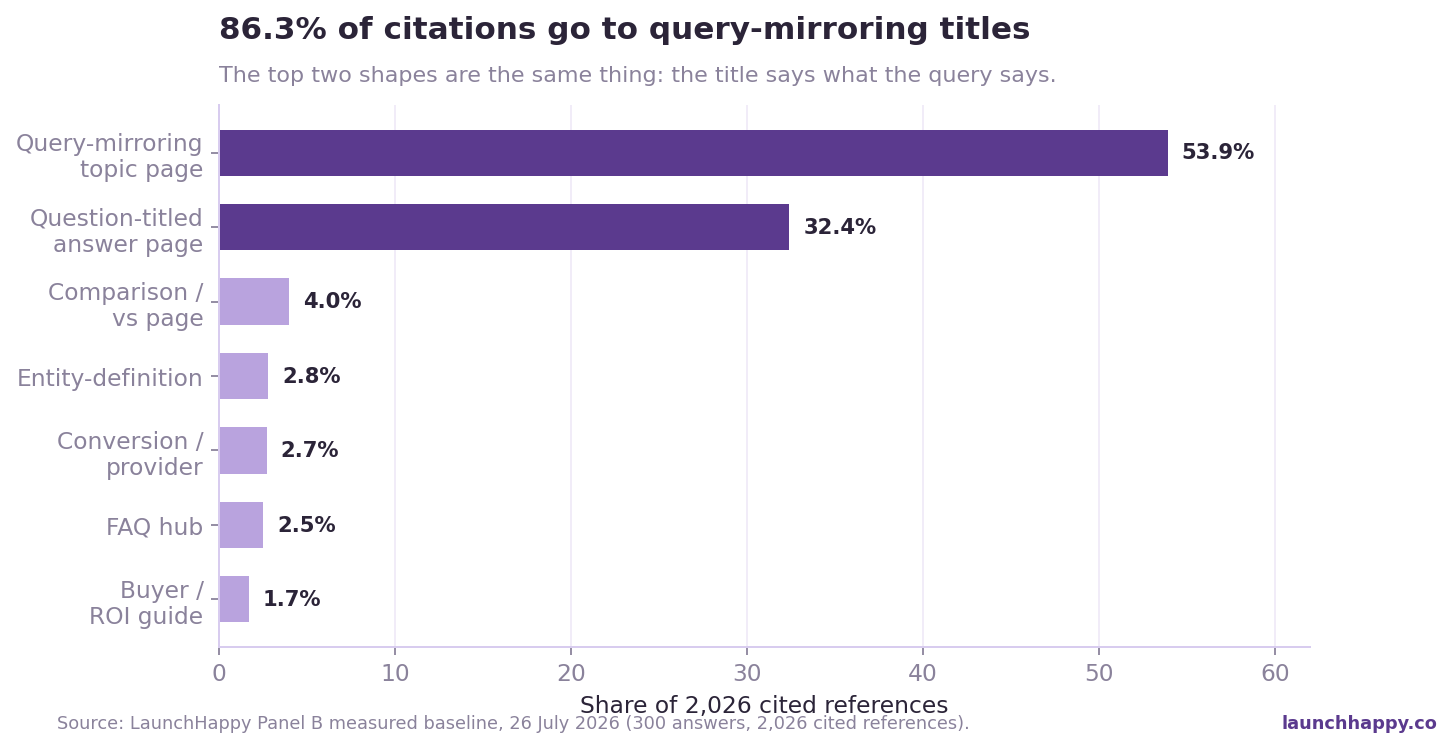
Figure 5: 86.3% of citations go to query-mirroring titles
It is worth being precise about why that is not a trick. Restating the question in the title is not keyword stuffing — a tactic the KDD 2024 study found performs worse than baseline [6]. It is the opposite move. Keyword stuffing repeats a term at the expense of readability; question-mirroring makes the title a truthful description of what the page delivers. A page titled with the question it answers is easier for a human to choose and easier for a machine to match, and neither is being deceived.
The failure mode this replaces is the internally-phrased title: "Structured Data Considerations for Modern Web Properties" instead of "What Is JSON-LD Structured Data?". The first sounds more senior. The second is what someone types.
Independent research points the same way with different labels. Wix and Evertune data indicate listicles account for 21.9% of citations in AI Mode, ChatGPT and Perplexity, articles 16.7% and product pages 13.7%, with 45.48% of informational queries citing articles and 40.86% of commercial queries citing listicles [12].
Two observations from the program's earlier five-entity-type model are worth adding, because they cut against intuition [31]. First, the single most-cited page in that model was an entity-definition page — a plain statement of what the brand is — at 30 citations, more than any other individual page. Second, an FAQ hub earned 26 citations from one page, spread across many different queries. Efficiency per page and total share are different questions, and a plan built only on totals will miss both of these.
Does structured data cause citations?
Short answer: there is no strong published evidence that it does, and the largest claim to the contrary comes from vendors selling implementation.
Google has stated a position and it is unambiguous. Its AI features documentation says there are no additional requirements to appear in AI Overviews or AI Mode and no other special optimizations necessary, and states directly that there is no special schema.org structured data you need to add. It goes further: you do not need to create new machine-readable files, AI text files, or markup [2]. The one piece of structured-data guidance offered in that context is a consistency rule — make sure markup matches the visible text on the page [2].
Other engines have said nothing comparable. OpenAI, Anthropic and Perplexity have not published guidance stating that their retrieval systems treat third-party structured data as a citation signal. Silence is not evidence in either direction; it is an open question.
The scored analysis does not rank it highly. Zyppy's meta-analysis of 54 studies put search rank at 9.4, query fan-out at 9.3, preview control at 9.2 and topic-cluster ranking at 8.9 [10]. In the same analysis, llms.txt scored 2.0 out of 10, with the assessment that no credible evidence supports its influence on AI citations [10].
And there is a measured null. Across the 49 cited pages parameterised in program research, JSON-LD schema was present on zero [31]. Every page in that sample earned its citations without any structured data at all.
None of that means markup is worthless. It helps machines parse claims correctly, it disambiguates your identity, it is cheap and stable, and Google has said unused structured data causes no problems [5]. It means markup is hygiene, not leverage — and if someone is pricing it as an AI-visibility service, the evidence does not currently support the invoice. That question is examined in depth in Does Schema Markup Help With ChatGPT Visibility? and the priority order across types in Which Schema Types Matter Most for AI Search?.
Does ranking still decide it?
Partly, and less than it did — but the sources disagree about how much less.
Ahrefs data indicates AI Overview citations from top-10 organic results fell from roughly 76% in July 2025 to 38% in March 2026 [9]. BrightEdge put the figure at 17% in February 2026 [14]. Those are not close.
Both cannot be right about the same measurement, and the gap is a useful reminder of how young this field is. Different query samples, different verticals, different definitions of a citation. What both agree on is direction: ranking is a weaker route to citation than it was, and it is no longer sufficient on its own.
It is also not dispensable. Zyppy still scores search rank as the single highest-weighted factor at 9.4 [10]. The reconciliation is that ranking is necessary-ish but no longer sufficient: you generally have to be retrievable and reasonably well-positioned to enter the candidate set, but entering it does not win the citation.
Two related structural findings. AI Overviews now trigger on approximately 48% of tracked queries, up from around 30% a year earlier [14] — the surface is expanding fast. And citations concentrate: Growth Memo found the top 10 domains take 46% of all ChatGPT citations within a topic, and the top 30 take 67% [17].
That concentration sounds discouraging and mostly is not, because it is concentration within a topic. It is an argument for picking a narrow subject you can genuinely own rather than covering a broad category thinly.
Freshness, and the engines' disagreement with each other
Two findings that complicate any single strategy.
Freshness is a real signal. ConvertMate's AI Visibility Study, covering 80 million citations across more than 10,000 domains, reported that content updated within the last 90 days received roughly a 3.2x citation multiplier [18]. That is one of the largest single effects in the published literature, and it argues for maintaining a small set of pages properly rather than publishing a large set and abandoning them.
A caution attached to it: restamping a page's date without changing the content is exactly the class of tactic C-SEO Bench found does not work [7], and it destroys the only signal you were trying to send. Update the content, then update the date.
Engines behave very differently from one another. Semrush's 126-million-prompt study found only 36 brands maintained top-100 visibility across all four major AI platforms, that ChatGPT cites roughly 15 sources per response while Gemini cites around 3, and that on Gemini the overlap between mentioned brands and cited domains can be as low as 30% [15].
An engine citing 15 sources is a fundamentally more forgiving environment than one citing 3. Visibility on one platform tells you very little about visibility on another, and a report claiming a single "AI visibility score" is compressing away most of the information.
What actually changed, and when
A short chronology, because "AI search changed everything" is not actionable and the specific changes are.
AI Overviews became normal. BrightEdge put the trigger rate at approximately 48% of tracked queries by February 2026, up from around 30% a year earlier [14]. Roughly half of tracked queries now produce a generated answer above the links.
The link between ranking and citation loosened. Ahrefs measured the top-10 organic share of AI Overview citations falling from about 76% in July 2025 to 38% by March 2026 [9]; BrightEdge measured 17% in February 2026 [14]. Whichever is closer, the direction is the same and the move happened inside a year.
Click behaviour changed underneath it. Seer Interactive measured organic CTR falling 61% on queries where an AI Overview appears [13], while cited brands gained [13]. The pie shrank and the slices were redistributed simultaneously, which is why aggregate traffic numbers hide what is happening.
A rich result was withdrawn mid-stream. Google restricted FAQ rich results to well-known authoritative government and health sites in August 2023 [5], then removed them from Google Search entirely on 7 May 2026, dropping the Search Console report and Rich Results Test support in June 2026 and API support in August 2026 [1]. No blog post, no explanation [24].
That last one is the most instructive, and not because FAQ schema mattered much. It is a reminder that a large part of what the industry calls strategy is actually dependence on a product decision at one company. The findings on this page that are most likely to still hold in two years are the ones about how people ask questions and how text gets extracted — not the ones about any specific feature.
What "authority" actually seems to mean here
Ask why AI cites one site over another and the answer that comes back most often is "authority." It is a word doing very little work, and it is worth breaking into the parts the evidence can actually speak to.
Being a known entity. Retrieval systems have to resolve a name to a thing. A business with a common name, a recent rebrand, or a larger namesake is genuinely ambiguous. The program's five-entity-type research found that the single most-cited individual page was an entity-definition page — a plain statement of what the organisation is — at 30 citations, more than any other page in the sample [31]. That is not authority in the reputational sense. It is legibility, and it is largely within your control.
Being findable across a topic rather than at a point. Because AI features fan a question out into multiple related searches [2], the unit that gets retrieved is closer to a cluster than a page. Zyppy scores topic-cluster ranking at 8.9, its highest content-strategy signal [10], and Growth Memo's concentration finding — top 10 domains taking 46% of ChatGPT citations within a topic, top 30 taking 67% [17] — describes the same thing from the other side.
Being checkable. The KDD 2024 experiments found statistics, quotations and citations were the three strongest modifications [6]. All three do the same thing: they make claims verifiable. The C-SEO Bench corrective — most conversational-SEO tactics do not help, while plain source relevance keeps working [7] — points the same way.
Being current. A roughly 3.2x multiplier for content updated within 90 days [18] is a large effect for something with no reputational component at all.
What is conspicuously missing from that list is anything resembling brand size. The Panel B measurement found citations spread across 491 distinct domains, with the most-present single domain appearing in only 13.7% of answers and 395 of the 491 appearing in 1% or fewer [32]. Established SEO platforms sat below general discussion sites. That is not what a market dominated by authority looks like. It is what an unclaimed one looks like — and it is the most encouraging finding here for anyone small.
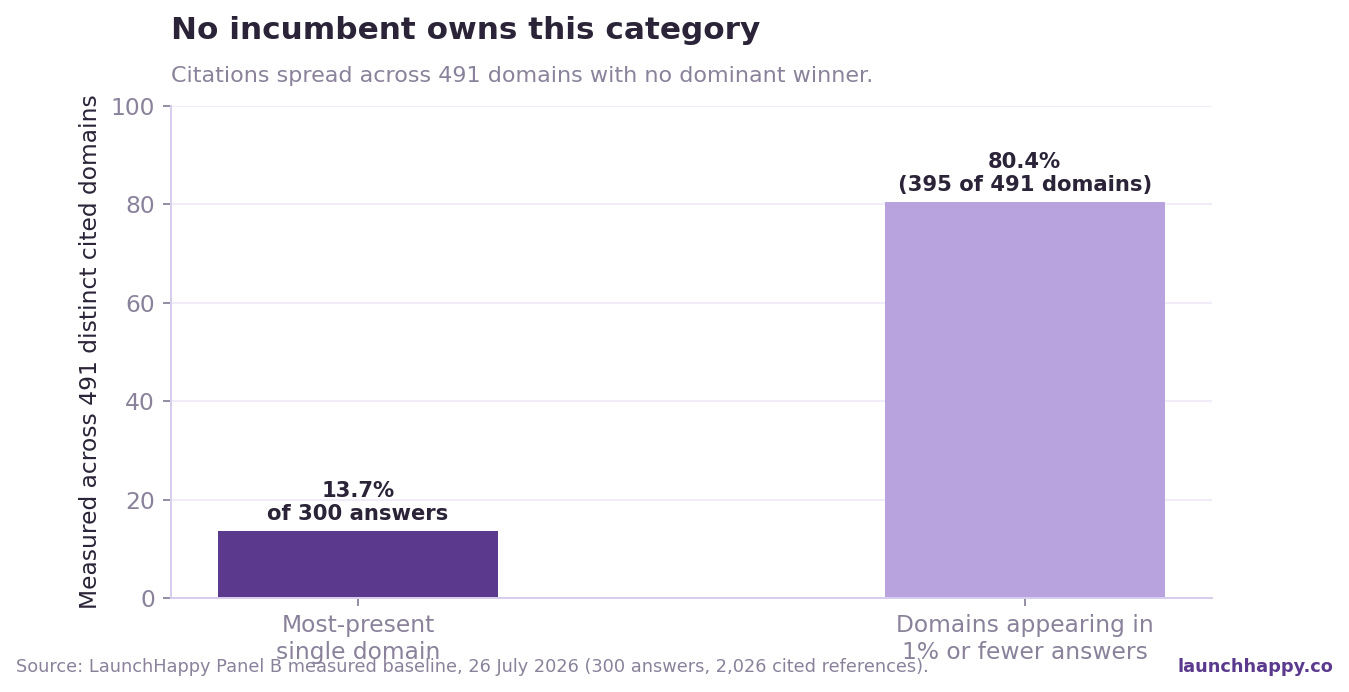
Figure 6: No incumbent owns this category
What the evidence does not tell us
An evidence review that does not mark its own limits is advocacy. Four honest gaps.
Almost none of this is causal. With the exception of the KDD 2024 experiments [6] and C-SEO Bench [7], the literature is correlational. "Cited pages have X" is not "X causes citation." Cited pages have many things in common because they tend to be good pages on well-covered sites.
The samples are small relative to the claim. Forty-nine pages [31], 300 answers [32], 3,119 queries [13] — these are respectable studies, but they are being used to make claims about systems handling billions of queries across every subject. Treat single-study figures as indicative, not settled.
Nobody outside the labs knows how retrieval actually works. We observe inputs and outputs. The ranking and grounding logic inside ChatGPT, Gemini, Claude and Perplexity is not public, changes without notice, and differs between them. Every model of "why AI cites" is reverse-engineered from behaviour.
The measurement itself is unstable. Two credible sources differ by a factor of two on the top-10 question [9][14]. Only about 14% of marketers currently track AI search performance at all [19], which means the field's shared knowledge rests on a handful of vendor studies rather than broad practice.
The reasonable posture is to act on the best-supported findings, measure your own results against a fixed question set, and change your mind when your own data disagrees with the literature.
What to do, ranked by strength of evidence
Ordered by how well supported each is, not by how easy it is to sell.
1. Be retrievable. Confirm crawling is allowed in robots.txt and at the CDN or hosting layer [2]. Check that no nosnippet directive is suppressing your snippets — Zyppy scores preview control at 9.2, and pages suppressing previews can lose AI citation visibility because engines lean on snippet data when grounding [10][2]. This is a thirty-minute audit with the largest downside of anything on this list.
2. Answer in the opening block. 44.2% of citations come from the first 30% of the page [11]. Invert the standard structure.
3. Mirror the question in the title. 86.3% of measured cited references pointed to query-mirroring titles [32].
4. Write in extractable units. A third of citations are passage-level [32]. Question-shaped heading, then a 40-to-80-word answer that stands alone.
5. Add statistics, quotations and citations. The three highest-performing modifications in the only substantial controlled experiment [6], and the ones C-SEO Bench's corrective does not undercut [7].
6. Keep it current. Roughly a 3.2x multiplier for content updated within 90 days [18]. Update the content, not just the date.
7. Build a cluster, not a page. Query fan-out rewards topical coverage [2][10]; concentration is within topics [17].
8. Keep ranking. Still the highest-weighted single factor [10], even as its share falls [9][14].
9. Ship schema because it is correct, not because it will get you cited. It is cheap, stable and harmless [5], and there is no strong evidence it drives citations [2][10][31]. The implementation detail is in How to Add FAQ Schema to a Website (Step by Step) and the format itself in What Is JSON-LD Structured Data? A Plain-English Guide.
10. Measure your own. Pick a fixed set of questions, record what the assistants say today, change one thing, re-run the same questions. A frozen question set is the only way to tell a real improvement from a platform update.
A note on why that last point is not filler. Every figure on this page will drift. Trigger rates moved from roughly 30% to 48% in a year [14]; the top-10 citation share moved by tens of percentage points in eight months [9]. Advice calibrated to a 2026 snapshot will be miscalibrated by 2027, and the only defence is an instrument you control. Freeze the questions, repeat them, and let your own data outrank anything written here — including this page.
The corollary is a caution about the denominator. If you change the questions between runs, or add questions your new content happens to target, the score will rise for reasons that have nothing to do with visibility. That is the most common way AI-visibility reporting flatters itself, and it is entirely avoidable by never editing the question set once it is frozen.
Is any of this worth doing?
The traffic is smaller and better, and the gap between cited and uncited brands is widening.
Seer Interactive's study of 3,119 informational queries across 42 organizations found organic click-through rate fell 61%, from 1.76% to 0.61%, on queries where an AI Overview appears [13]. That is the headline everyone quotes, and on its own it reads like a reason to give up.
The second half of the same study is the part that matters: brands cited in those AI Overviews earned roughly 35% higher organic CTR and 91% higher paid CTR than uncited brands on the same queries [13]. The AI Overview is not uniformly destroying clicks. It is redistributing them toward the cited.
Semrush separately valued AI-referred visitors at around 4.4x traditional organic visitors [16].
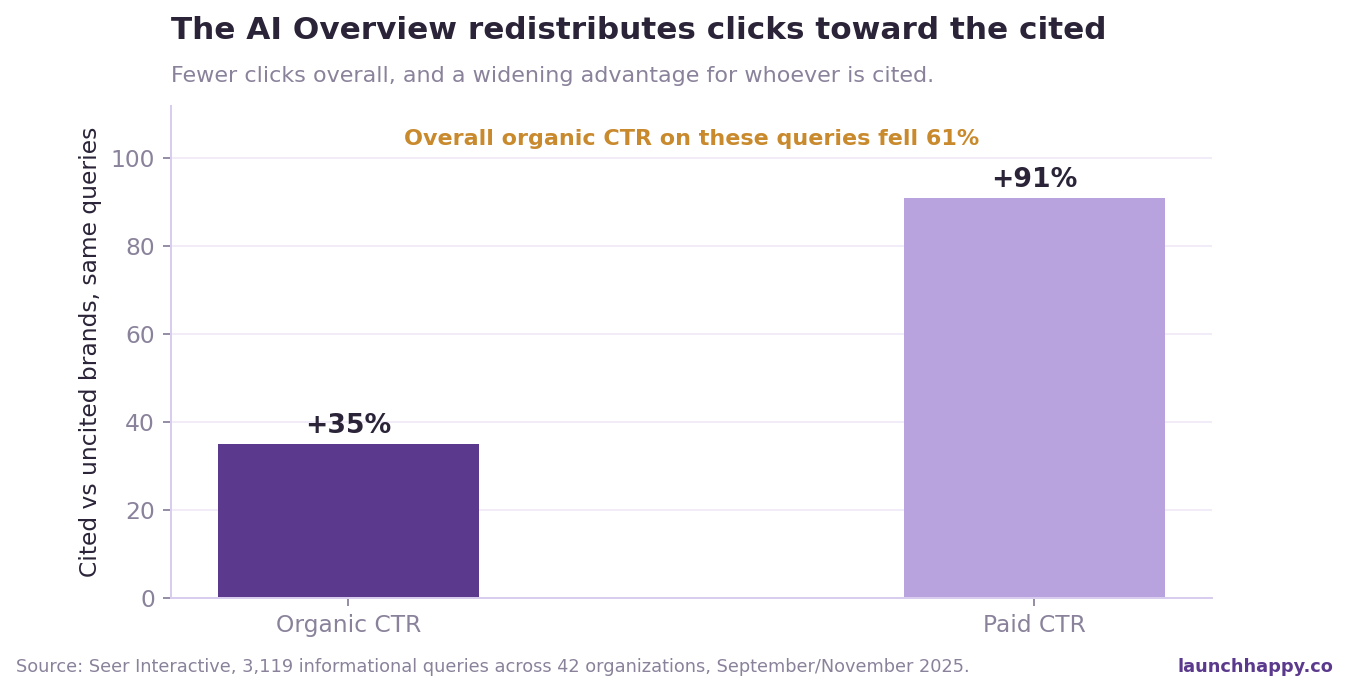
Figure 7: The AI Overview redistributes clicks toward the cited
So the picture is: fewer clicks overall, materially better clicks, and a widening advantage for whoever is cited. Combined with the finding that only about 14% of marketers track any of this [19], the window for a small, focused operator is unusually open — not because the work is easy, but because most of the field is not measuring whether their work is working.
The counter-argument deserves stating fairly. Traditional organic search still sends vastly more traffic than AI assistants do, and a business that abandons conventional SEO for generative visibility is trading a large certain channel for a small uncertain one. Nothing in this evidence supports that trade. Ranking is still the highest-weighted single factor in the scored analysis [10], and the two disciplines overlap heavily rather than competing.
The reasonable position is that this is not a replacement for SEO but an additional way of losing or winning on the same work. The pages that earn AI citations are, on the evidence here, mostly pages that were already good and are now structured so a machine can quote them. That is a smaller change than the discourse suggests, and a more achievable one.
Frequently asked questions
Why isn't my website cited by AI? Most commonly one of three things: the page is not retrievable (blocked at robots.txt or the CDN, not indexed, or suppressing snippets), the answer is buried past the opening third of the page, or the title does not restate the question anyone is asking. Check retrievability first — it is the only one that makes everything else irrelevant [2][10].
Does AI cite the highest-ranking page? Not reliably. Ahrefs data indicates AI Overview citations from top-10 organic results fell from about 76% in July 2025 to 38% in March 2026, while BrightEdge put it at 17% in February 2026 [9][14]. Ranking remains the highest-weighted single factor at 9.4 in Zyppy's analysis [10], but it is no longer sufficient.
Does longer content get cited more? The evidence conflicts. Ahrefs found a near-zero correlation of ~0.04 between word count and citation position across 174,048 pages, with 53.4% of cited pages under 1,000 words [8]. Program research in a competitive commercial category found a 4,467-word median among cited pages [31]. Write until the question is answered; in contested categories that will be long.
How long until I see results? Nobody has published a reliable figure, and it will depend on how often your pages are recrawled. The freshness finding — a ~3.2x multiplier for content updated within 90 days [18] — suggests the retrieval layer responds on a timescale of weeks to months rather than days.
Does schema markup get me cited? There is no strong published evidence that it does. Google states no special schema.org structured data is needed for its AI features [2], and program research found JSON-LD on zero of 49 measured cited pages [31].
Why am I cited by ChatGPT but not Gemini? That is the normal case, not an anomaly. Semrush's 126-million-prompt study found only 36 brands held top-100 visibility across all four major platforms, and that ChatGPT cites around 15 sources per response versus about 3 for Gemini [15].
Do AI assistants read JavaScript-rendered content? Google processes JavaScript in three phases — crawling, rendering, indexing — with rendering deferred until resources allow [27]. Many non-Google retrieval crawlers execute far less JavaScript. Serve anything that matters in the initial HTML.
Is citing other websites bad for me? The opposite, on the available evidence. Cite Sources was one of the three highest-performing modifications in the KDD 2024 study [6], and cited pages in program research carried a median of 11 external links [31].
How do I actually measure this? Fix a question set, run it across the platforms you care about with several repeats per question, and record which domains are cited. Repeat on the identical question set later. Only about 14% of marketers do any of this [19], which is why most AI-visibility claims are unfalsifiable.
Written by the LaunchHappy GEO team. LaunchHappy measures AI visibility against a frozen question set and reports what changed. See the GEO Report.
References
[1] Google Search Central, FAQ (FAQPage, Question, Answer) structured data, updated 8 May 2026 — https://developers.google.com/search/docs/appearance/structured-data/faqpage [2] Google Search Central, AI features and your website, updated 10 December 2025 — https://developers.google.com/search/docs/appearance/ai-features [5] Google Search Central Blog, Changes to HowTo and FAQ rich results, 8 August 2023 — https://developers.google.com/search/blog/2023/08/howto-faq-changes [6] Aggarwal, Murahari, Rajpurohit, Kalyan, Narasimhan & Deshpande, GEO: Generative Engine Optimization, KDD '24, 24 August 2024 — https://dl.acm.org/doi/10.1145/3637528.3671900 [7] Puerto et al., C-SEO Bench, 2025 — https://arxiv.org/pdf/2606.20065 [8] Ahrefs (December 2025), short vs long content study, 174,048 pages and 560,346 AI Overviews, as reported by Digital Applied — https://www.digitalapplied.com/blog/content-strategy-ai-overviews-post-io-guide-2026 [9] Ahrefs (March 2026), AI Overview citation overlap with top-10 organic results, as reported by Digital Applied — https://www.digitalapplied.com/blog/ai-search-citation-ranking-factors-2026-data-study [10] Cyrus Shepard / Zyppy, AI Citation Ranking Factors, 7 May 2026, as reported by PPC Land — https://ppc.land/23-factors-that-actually-get-your-content-cited-by-ai-search-engines/ [11] Zyppy / Authoritas (2025), positional bias in LLM citations, as reported by AI Thinker Lab — https://aithinkerlab.com/generative-engine-optimization-2026/ [12] Wix / Evertune (March–May 2026), content-type citation study, as reported by Position Digital — https://www.position.digital/blog/ai-seo-statistics/ [13] Seer Interactive (September/November 2025), AI Overviews CTR study, 3,119 informational queries across 42 organizations, as reported by Omnibound — https://www.omnibound.ai/blog/ai-seo-statistics [14] BrightEdge (February 2026), AI Overview trigger rate and citation source data, as reported by Omnibound — https://www.omnibound.ai/blog/ai-seo-statistics [15] Semrush 126-million-prompt AI visibility study (2026), as reported by Machine Relations — https://machinerelations.ai/research/ai-search-citation-factors-2026 [16] Semrush (June 2025), AI-referred visitor conversion rate, as reported by Omnibound — https://www.omnibound.ai/blog/ai-seo-statistics [17] Growth Memo (March 2026), ChatGPT citation concentration by domain, as reported by Position Digital — https://www.position.digital/blog/ai-seo-statistics/ [18] ConvertMate, AI Visibility Study (80 million citations, 10,000+ domains), as reported by SLT Creative — https://www.sltcreative.com/ai-seo-statistics [19] Conductor (2026), share of marketers tracking AI search performance, as reported by AI Thinker Lab — https://aithinkerlab.com/generative-engine-optimization-2026/ [24] Matt G. Southern, Google Drops FAQ Rich Results From Search, Search Engine Journal, 10 May 2026 — https://www.searchenginejournal.com/google-drops-faq-rich-results-from-search/574429/ [27] Google Search Central, Understand the JavaScript SEO basics — https://developers.google.com/search/docs/crawling-indexing/javascript/javascript-seo-basics [31] LaunchHappy GEO Certified program research, citation-models.md — first-party measured research, 2026 [32] LaunchHappy Panel B measured baseline, 26 July 2026 (300 measured answers, 2,026 cited references) — first-party