Does Schema Markup Help With ChatGPT Visibility?
There is no strong published evidence that schema markup improves ChatGPT visibility, and the honest answer has to be given platform by platform rather than as a single yes or no. OpenAI has published no guidance stating that ChatGPT's retrieval uses third-party structured data as a citation signal. Google, which does publish guidance for its own AI features, states the opposite of the common advice: there are no additional requirements to appear in AI Overviews or AI Mode, and "there's also no special schema.org structured data that you need to add" [2]. Independent evidence points the same way — Zyppy's May 2026 meta-analysis of 54 studies ranks markup below search rank, query fan-out and preview controls [10], and in first-party research that fully parameterised 49 pages which had genuinely earned AI citations, JSON-LD was present on zero of them [31]. Schema is still worth shipping. Just not for this reason.
Why this question is usually answered badly
Three failures recur in almost every article on this topic, and they are worth naming because they tell you what to distrust.
It gets answered as yes or no. "Does schema help AI?" bundles at least four different systems — ChatGPT, Google's AI features, Perplexity, Gemini — that are built differently, retrieve differently, and have published wildly different amounts about how they work. One of them has made an explicit statement. The others have made none. A single yes or no cannot be faithful to that.
Nobody reports the nulls. Measured findings that markup did not correlate with citations are much less publishable than findings that it did, particularly when the publisher sells implementation. This page reports one such null in detail because it is the most directly relevant evidence available [31].
"Helps" is left undefined. Schema demonstrably helps machines parse claims correctly. That is not the same as causing a citation. Most confident answers on this topic slide between the two senses of the word without noticing.
The rest of this page separates those senses and keeps them apart.
Two senses of "helps", and why they get confused
Almost every disagreement about schema and AI visibility dissolves once you separate two claims that use the same verb.
Claim A: schema helps machines understand the page. This is well supported and largely uncontroversial. Google's own framing is that structured data helps it understand the content of a page and gather information about the entities described in the markup [3]. Markup turns an implicit fact — this string is the author, this date is the publication date — into an explicit one. Nobody serious disputes this.
Claim B: schema causes an AI assistant to cite you. This is the claim that sells retainers, and it is the one with no supporting evidence. Google says no special markup is required for its AI features [2]; no other provider claims otherwise; the scored meta-analysis ranks it below four other factors [10]; and a sample selected specifically for having earned citations contained none of it [31].
Claim A is true and modest. Claim B is unevidenced and lucrative. Most content on this topic states Claim A, then draws conclusions that only follow from Claim B.
Watch for the slide. It usually happens in a single sentence: "schema helps AI understand your content, so it helps you get cited." The first half is sourced. The second half is a leap, and the word doing the work is "so".
What each platform has actually said
Start with the primary sources, because there are fewer of them than the volume of advice suggests.
Google — an explicit statement, and it is a negative one. Google's AI features documentation says the best practices for SEO remain relevant for AI Overviews and AI Mode, that there are no additional requirements to appear in them and no other special optimizations necessary, and — directly — that there is no special schema.org structured data that you need to add. It adds that you do not need to create new machine-readable files, AI text files, or markup [2].
Google does give one piece of structured-data guidance in that context, and it is a consistency rule rather than a visibility one: make sure your structured data matches the visible text on the page [2].
Its stated technical requirement is narrow. To be eligible as a supporting link in AI Overviews or AI Mode, a page must be indexed and eligible to be shown in Google Search with a snippet, and there are no additional technical requirements [2].
OpenAI — no published claim either way. OpenAI has not published guidance stating that ChatGPT's browsing or retrieval treats third-party schema.org markup as a ranking or citation signal. This is worth stating plainly because a great deal of content asserts otherwise by implication. Absence of a statement is not evidence of absence of an effect — but it is also not permission to claim one.
Anthropic and Perplexity — likewise nothing comparable. Neither has published guidance saying their retrieval systems use third-party structured data as a citation signal.
So the evidential position is: one platform has said markup is not required, and the others have said nothing. There is no platform that has said markup helps.
The measured null
The most directly relevant evidence available is a first-party measurement, and it is worth setting out properly because null results are easy to wave away.
In LaunchHappy GEO Certified program research, 49 pages that had genuinely earned citations in AI answers were identified and then fully parameterised across every countable dimension: length, heading count, image count, internal links, external links, title formatting and structured data [31].
The results give a clear picture of what a cited page looked like in that sample [31]:
Parameter
Measured value across 49 cited pages
Mean length
5,247 words
Median length
4,467 words
Median H2 headings
8
Median images
14
Median internal links
54
Median external links
11
Titles carrying a year
19 of 49
Pages carrying JSON-LD schema
0 of 49
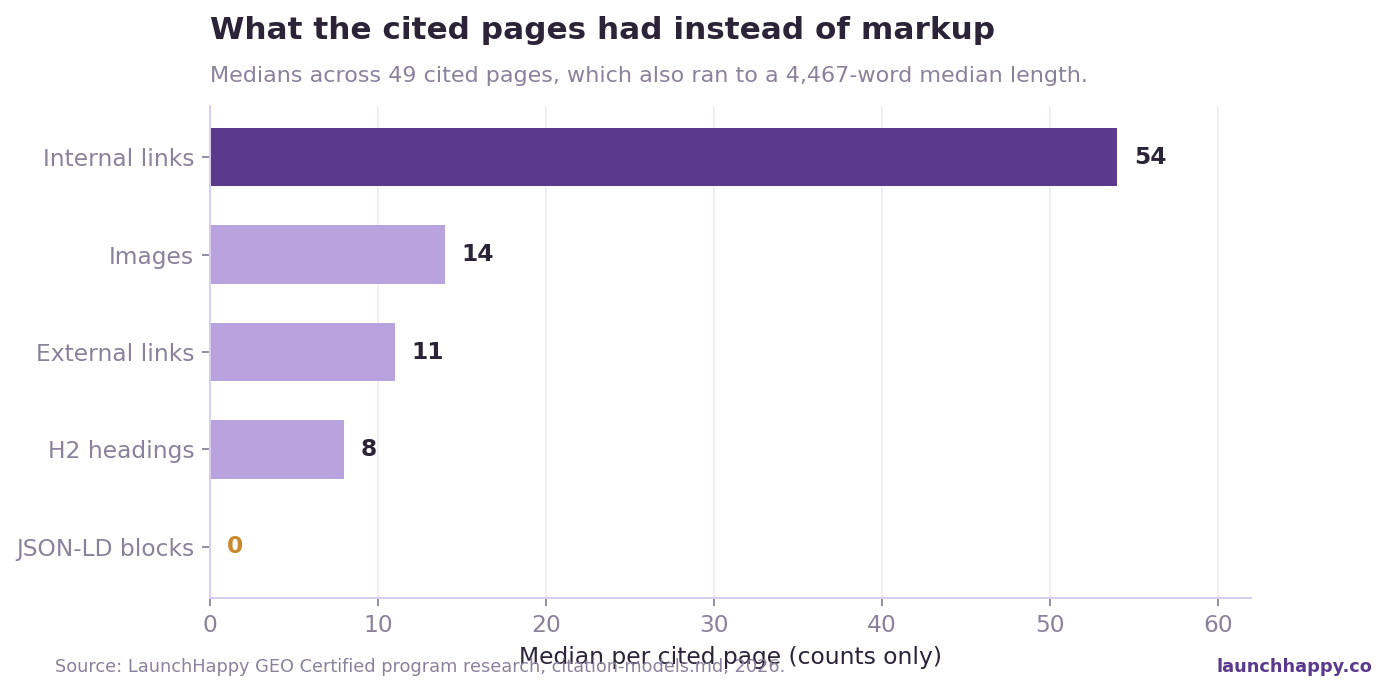
Figure 1: What the cited pages had instead of markup
Every one of those pages was winning citations without any structured data at all.
Two caveats belong with that figure, and stating them is the difference between evidence and advocacy. Forty-nine pages is a small sample. And it was drawn from one competitive commercial category, so it may not generalise to every vertical.
A third caveat cuts the other way and is usually omitted: the 0-of-49 finding is also evidence about the competitive field. If none of the pages winning citations in that category had shipped schema, then schema was uncontested ground — nobody was using it, so nobody could be losing to it. That is a reason to ship markup as cheap differentiation, and it is a completely different argument from "markup drives citations." It is worth making the honest version rather than the profitable one.
But the direction is unambiguous, and the result is not what you would expect if markup were an important input. If schema were driving citations, a sample of pages selected because they earned citations should be schema-rich. It was schema-free.
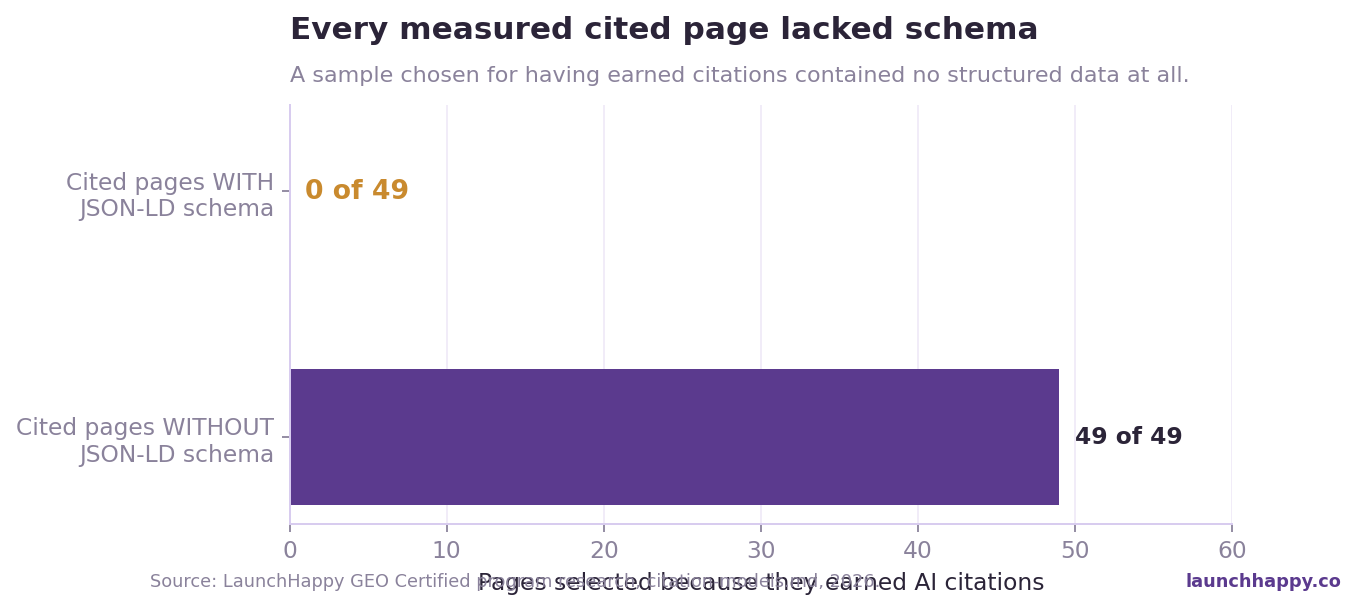
Figure 2: Every measured cited page lacked schema
A second measurement points the same way. The Panel B baseline — 25 frozen GEO-category questions across four AI platforms, three runs each, for 300 measured answers — logged 2,026 cited references across 491 distinct domains [32]. Those citations were going somewhere. They were not going to structured data.
What the scored evidence ranks above markup
The closest thing this field has to a weighted consensus is Cyrus Shepard's May 2026 meta-analysis for Zyppy, which synthesised 54 experiments, patents and case studies into 23 scored citation factors — the first attempt to rank AI-search advice by strength of evidence rather than by author preference [10].
Its highest-scoring factors were [10]:
Factor
Score (of 10)
Search rank
9.4
Query fan-out rank
9.3
Preview control
9.2
Topic-cluster ranking
8.9
llms.txt
2.0
Structured data does not appear near the top. llms.txt — the other machine-readable file marketed as an AI-visibility measure — scored 2.0, with the assessment that no credible evidence supports its influence on AI citations [10].
Preview control deserves singling out, because it is the one technical setting on that list that can actively destroy visibility rather than merely fail to add it. Pages using a nosnippet directive to suppress preview snippets can inadvertently reduce or eliminate AI citation visibility, because engines lean on snippet data when grounding [10]. Google confirms nosnippet, data-nosnippet, max-snippet and noindex are the controls that limit what is shown from a page [2].
If you are about to spend a day on schema, spend the first ten minutes confirming nobody has suppressed your snippets. The downside asymmetry is enormous.
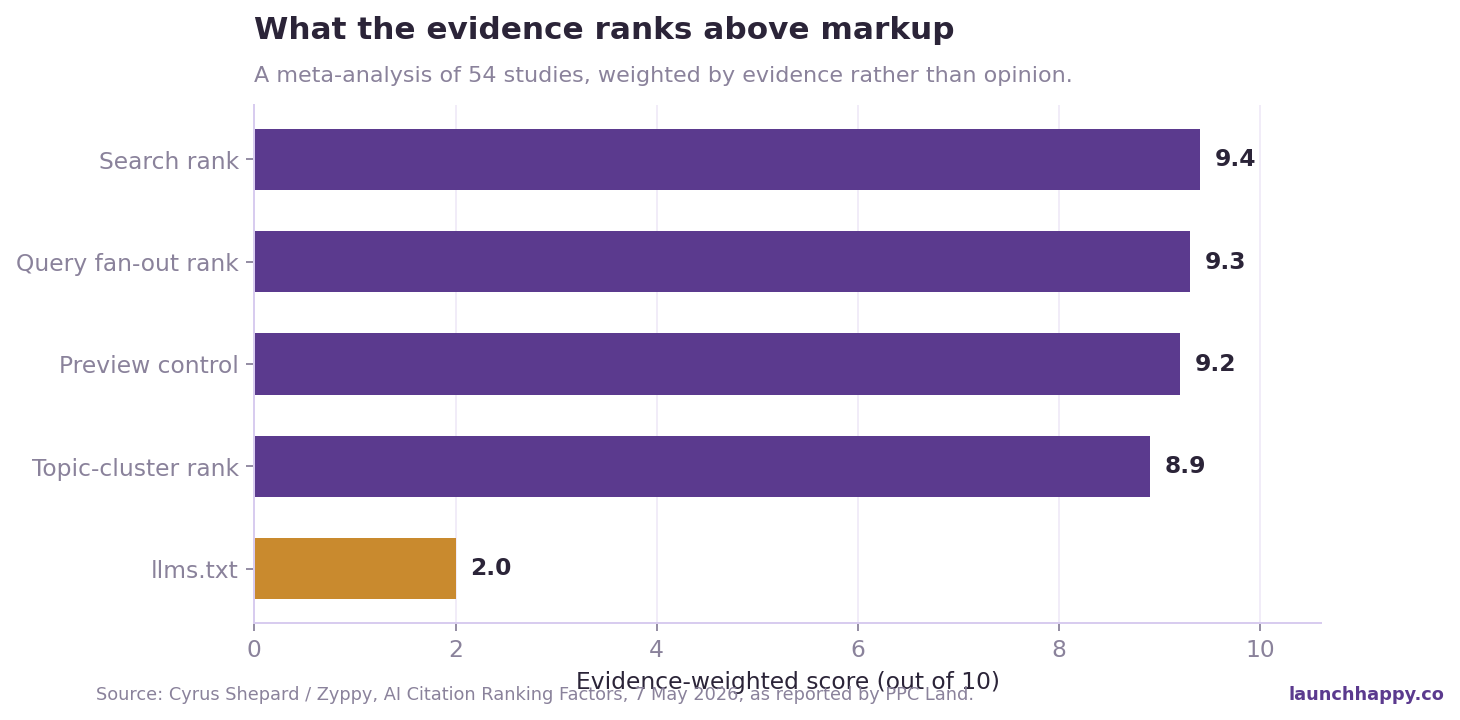
Figure 3: What the evidence ranks above markup
What the controlled experiments tested — and did not
It is worth noting what the strongest experimental evidence in the field examined, because schema is conspicuously absent from it.
GEO: Generative Engine Optimization, presented at KDD 2024, tested nine content modifications across roughly 10,000 queries in nine datasets [6]. The three strongest were Statistics Addition, Quotation Addition and Cite Sources, producing 30–40% relative improvement on Position-Adjusted Word Count and 15–30% on Subjective Impression [6]. The widely-quoted 40% figure is a maximum, not an average [6], and keyword stuffing performed worse than baseline [6].
None of the nine modifications was a schema type. The interventions that moved the needle were all changes to the visible text.
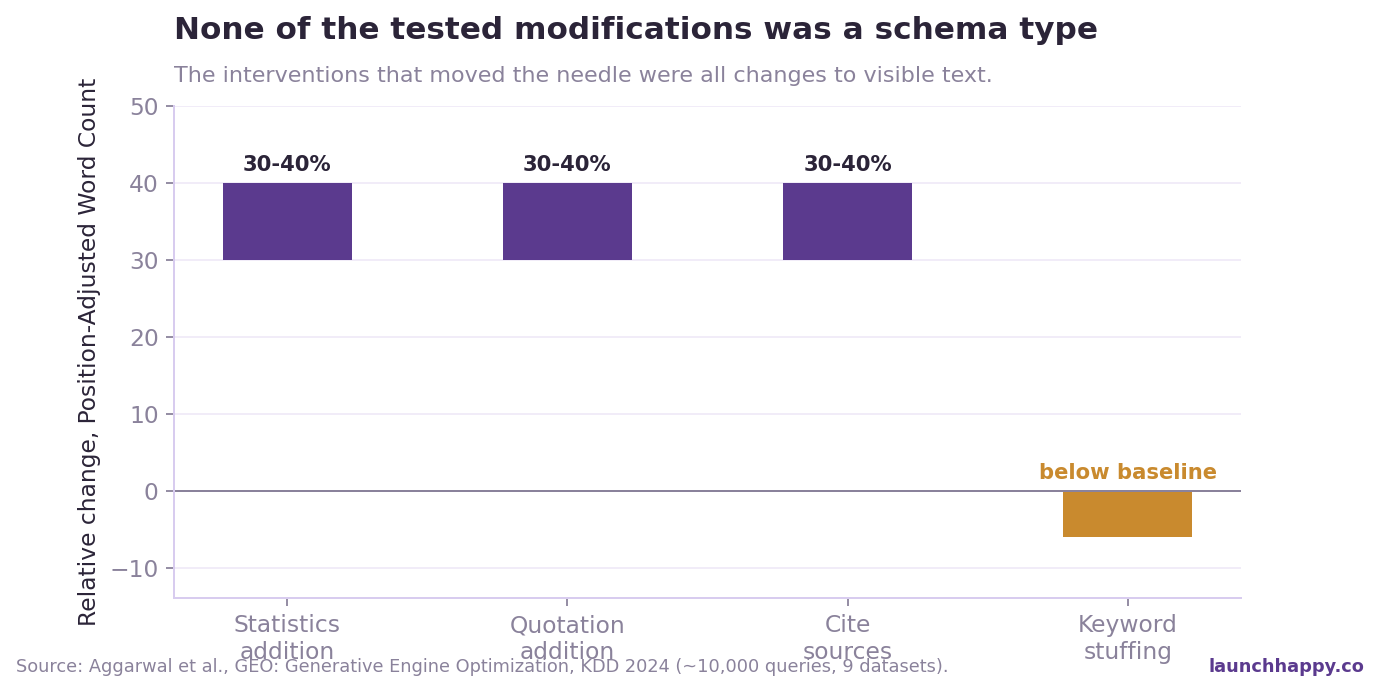
Figure 4: None of the tested modifications was a schema type
The corrective matters too. C-SEO Bench, the first systematic benchmark of conversational-SEO tactics, found most such tactics do not help and several hurt, while plain source relevance keeps working [7]. Read with the KDD results, the message is consistent: improving the source works, decorating it does not.
So why does everyone recommend schema anyway?
Three reasons, and only one of them is bad.
Because it used to be the answer to a different question. For a decade, structured data's job was to make a page eligible for a rich result — the star ratings, recipe cards and FAQ dropdowns that occupy more space in a results page. That was real, measurable in Search Console, and worth doing. When AI search arrived, the existing advice was simply carried across to a new context where its evidence base does not apply.
Because it is genuinely good hygiene. Markup helps machines parse claims correctly, disambiguates your identity, and costs almost nothing to maintain. Google has said unused structured data does not cause problems for Search [5]. These are real if modest benefits.
Because it is sellable. Schema implementation is discrete, deliverable and easy to invoice. "Write better answers to the questions your customers actually ask" is harder to scope and harder to bill. That asymmetry shapes what gets recommended, and it is worth being aware of when reading a proposal.
None of that makes the people recommending it dishonest. Most of the field is working from advice inherited three or four steps removed from any measurement, in a discipline that is barely eighteen months old and where only about 14% of practitioners track AI search performance at all [19]. When almost nobody measures, a plausible recommendation circulates unchallenged simply because there is no mechanism to challenge it. That is not fraud. It is what an unmeasured field looks like, and the remedy is measurement rather than suspicion.
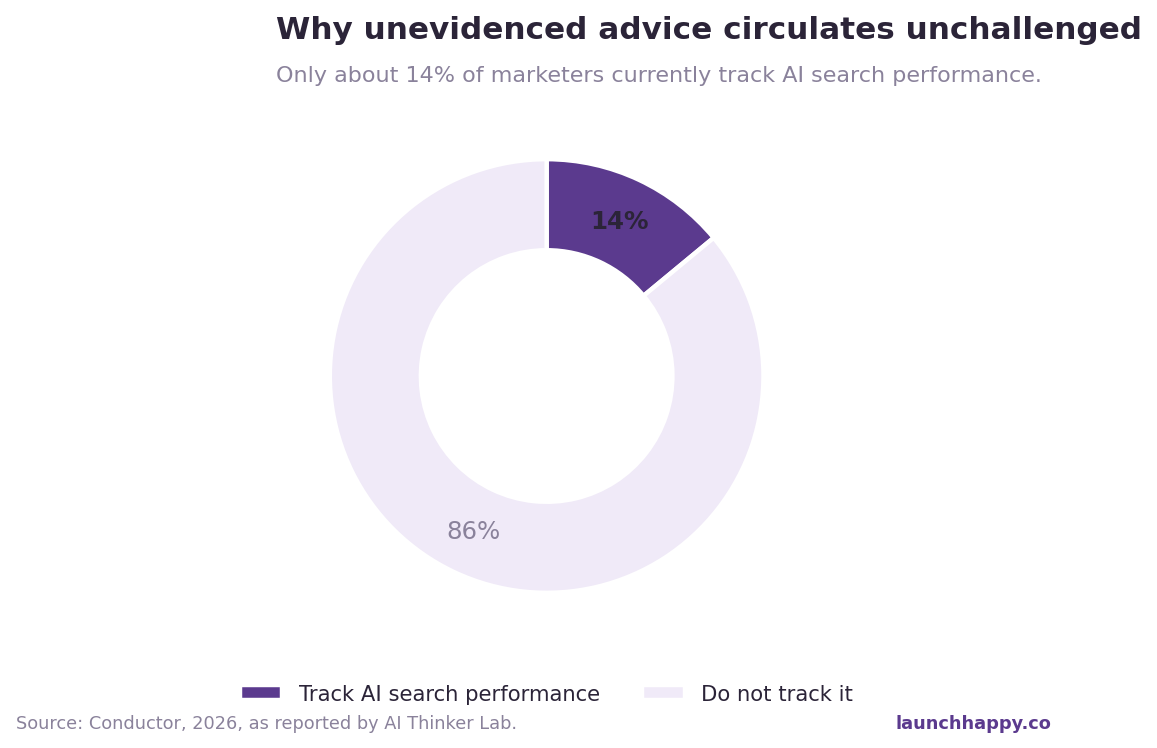
Figure 5: Why unevidenced advice circulates unchallenged
The tell is what happened to FAQ. Google restricted FAQ rich results to well-known authoritative government and health sites in August 2023 [5], then removed them from Google Search entirely on 7 May 2026, dropping the Search Console report and Rich Results Test support in June 2026 and API support in August 2026 [1]. No blog post, no explanation [24]. Within a day, half the industry declared FAQ schema dead and the other half declared it more important than ever for AI [24]. The second reaction is the one to notice: a deliverable losing its original justification was immediately re-sold under a new one, with no new evidence attached.
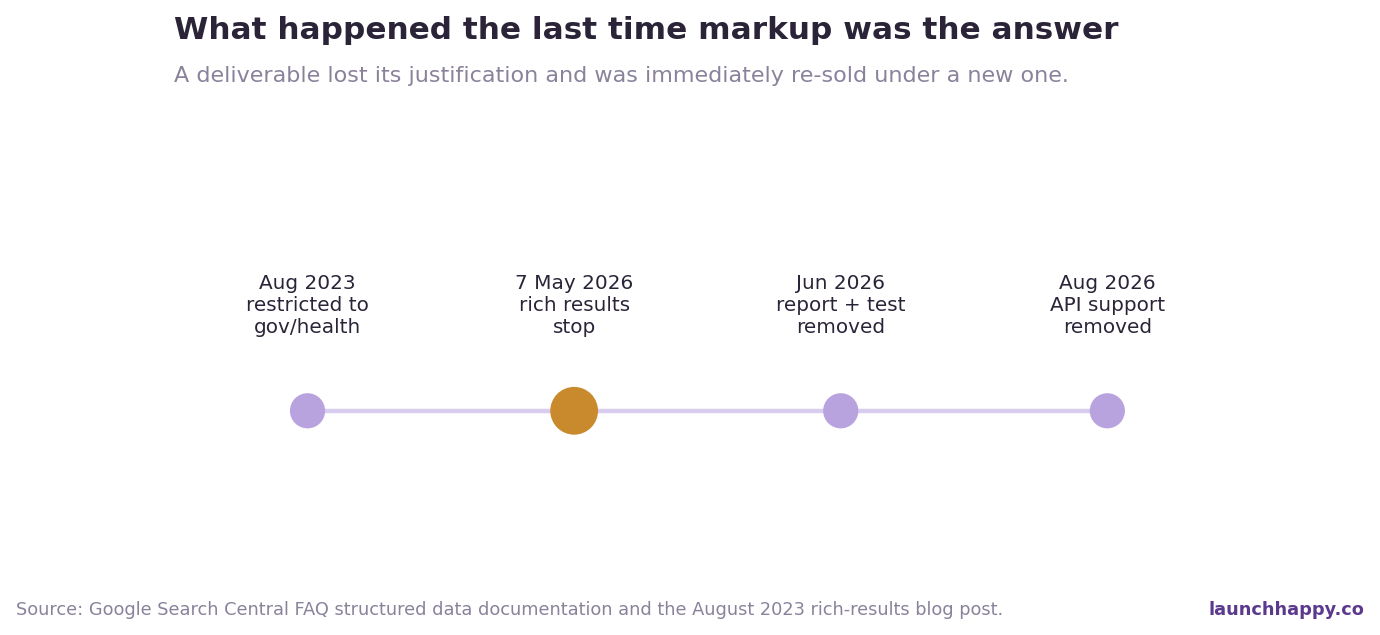
Figure 6: What happened the last time markup was the answer
Where schema genuinely earns its place
Having argued against the overclaim, here is the honest case for shipping it anyway.
Entity disambiguation. Organization markup states who is behind the site — name, canonical URL, logo, description, and sameAs links to verified profiles [30]. Retrieval systems have to resolve a name to a thing, and a business with a common name or a larger namesake is genuinely ambiguous. In the same program research, the single most-cited individual page was an entity-definition page — a plain-language statement of what the organisation is — at 30 citations, more than any other page in the sample [31]. Entity clarity was doing that work. Markup is the cheapest machine-readable expression of it.
Consistency enforcement. Google requires that markup accurately represent the page and match the visible text [4][2]. Maintaining it therefore forces a recurring audit: if the JSON-LD and the page disagree, one of them is stale.
Date clarity. ConvertMate's AI Visibility Study, covering 80 million citations across more than 10,000 domains, reported that content updated within the last 90 days received roughly a 3.2x citation multiplier [18]. If a machine cannot establish when a page was last meaningfully updated, it cannot apply that preference in your favour. An honest datePublished and dateModified remove the ambiguity — though restamping unchanged pages is precisely the kind of tactic C-SEO Bench found does not work [7].
Non-Google consumers. Bing, independent retrieval crawlers, internal search, browser extensions and accessibility tooling all parse the same blocks. None of them announced a deprecation.
Optionality on a moving target. The systems in question are eighteen months old and change without notice. Markup is stable, standardised and near-free to carry; Google has been explicit that unused structured data causes no problems for Search [5]. Holding a cheap, correct, machine-readable description of your pages is a reasonable hedge against a retrieval layer that starts consuming it. What it is not is a reason to claim present-tense results.
That is a reasonable case for perhaps an hour of work. It is not a case for an AI-visibility retainer.
What a defensible schema implementation looks like
If the case for markup is hygiene rather than visibility, the implementation should be sized accordingly. This is roughly an hour for a small site, and it should not need revisiting when the next rich result is withdrawn.
Organization, site-wide. Name, canonical URL, logo, description, and sameAs links to your verified profiles [30]. The sameAs field is the one most often left empty and the one doing the most work: it corroborates the entity described on your site against the same entity described somewhere you do not control.
Article on every post. Headline, description, honest datePublished and dateModified, author, publisher.
FAQPage on genuine FAQ sections only. Valid, harmless, no longer a rich result [1][29].
Type-specific markup where the thing actually exists — products, events, locations. This is ordinary SEO, the rich results are live and measurable, and it should be budgeted as SEO rather than as AI work.
Nothing you cannot substantiate on the page. Google's guidelines prohibit marking up content not visible to readers, marking up irrelevant or misleading content, and using structured data to deceive [4]. Auto-generated markup fails this routinely — an aggregateRating where there are no reviews, an author where there is no byline. Audit what your plugin emits on a real page rather than assuming it is correct.
Serve it in the HTML. Google processes JavaScript in three phases — crawling, rendering, indexing — with rendering deferred until resources allow [27], and many non-Google retrieval crawlers execute far less JavaScript than Googlebot. Markup that only materialises after hydration is markup a large share of machine readers never see.
Then stop. The recurring work is content, and that is where the rest of the budget belongs.
What to do instead
Ranked by strength of evidence, and mostly not technical.
Check retrievability first. Confirm crawling is allowed in robots.txt and at the CDN or hosting layer [2], and that no nosnippet directive is suppressing your snippets [10][2]. Nothing else matters if this is broken.
Answer in the opening block. Zyppy and Authoritas found 44.2% of all LLM citations are extracted from the first 30% of a document [11].
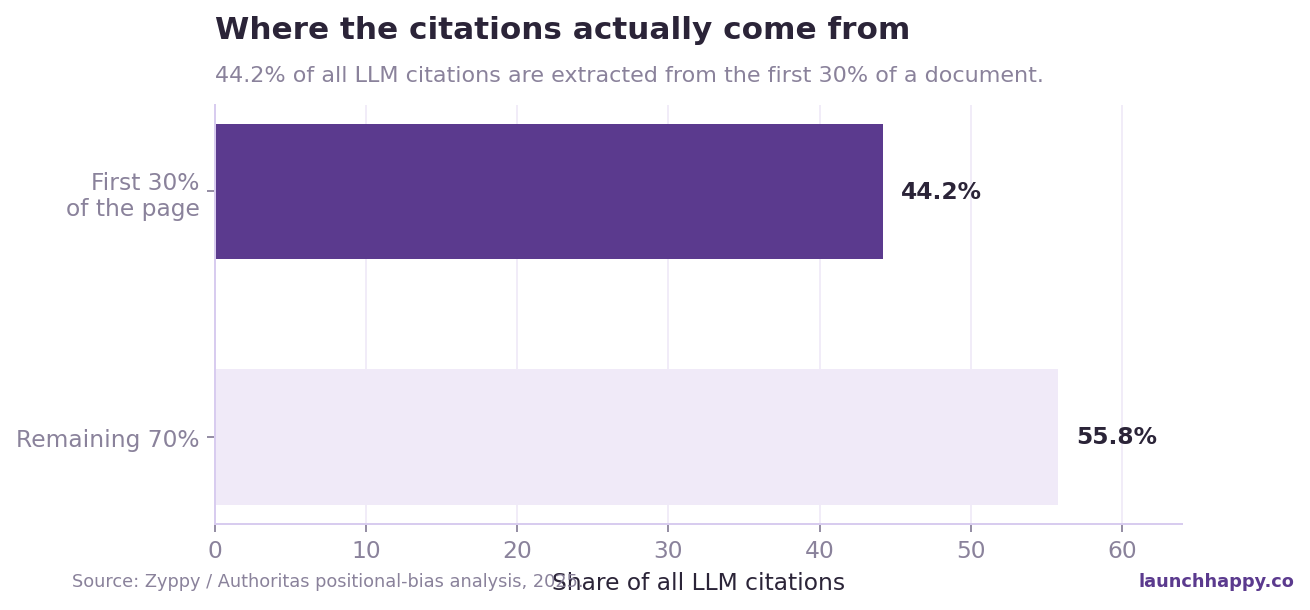
Figure 7: Where the citations actually come from
Mirror the question in the title. In the Panel B measurement, 86.3% of 2,026 cited references pointed to pages whose title or slug restated the query [32].
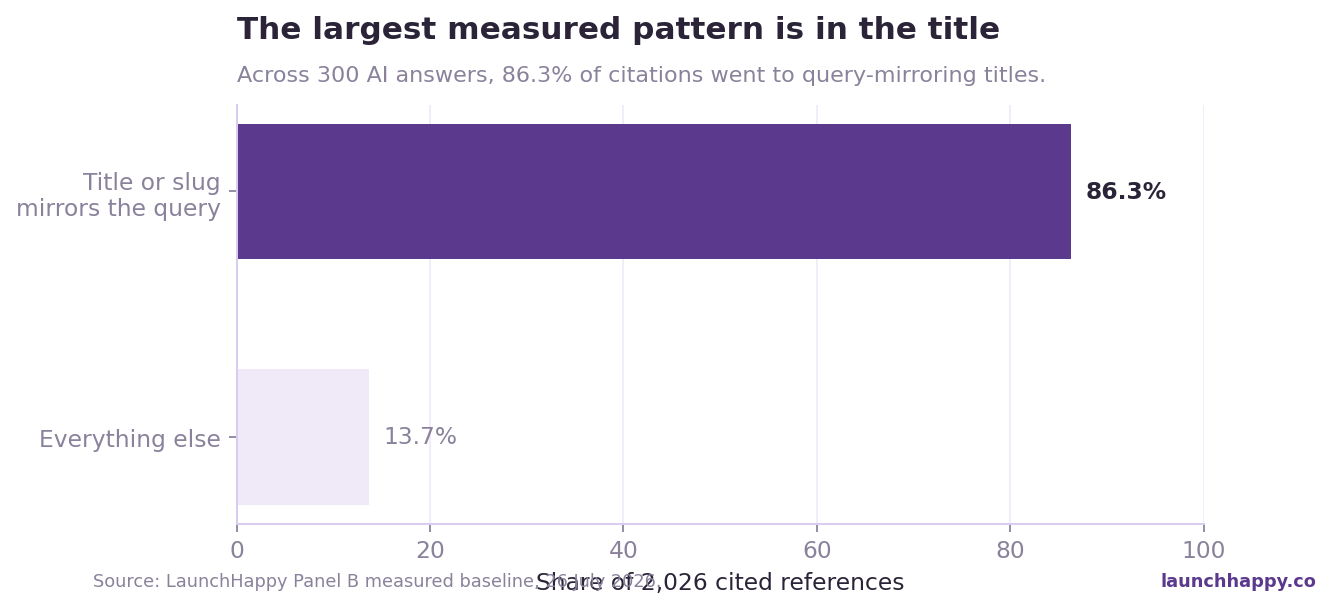
Figure 8: The largest measured pattern is in the title
Write in extractable units. 32.5% of measured citations were passage-level deep links using the #:~:text= fragment syntax — the assistant quoting one exact block [32]. Follow each heading with a 40-to-80-word answer that stands alone.
Add statistics, quotations and citations. The three highest-performing modifications in the only substantial controlled experiment [6].
Build a cluster. Google confirms AI features may use a query fan-out technique across subtopics [2]; Zyppy scores topic-cluster ranking at 8.9 [10]; Growth Memo found the top 10 domains take 46% of ChatGPT citations within a topic and the top 30 take 67% [17].
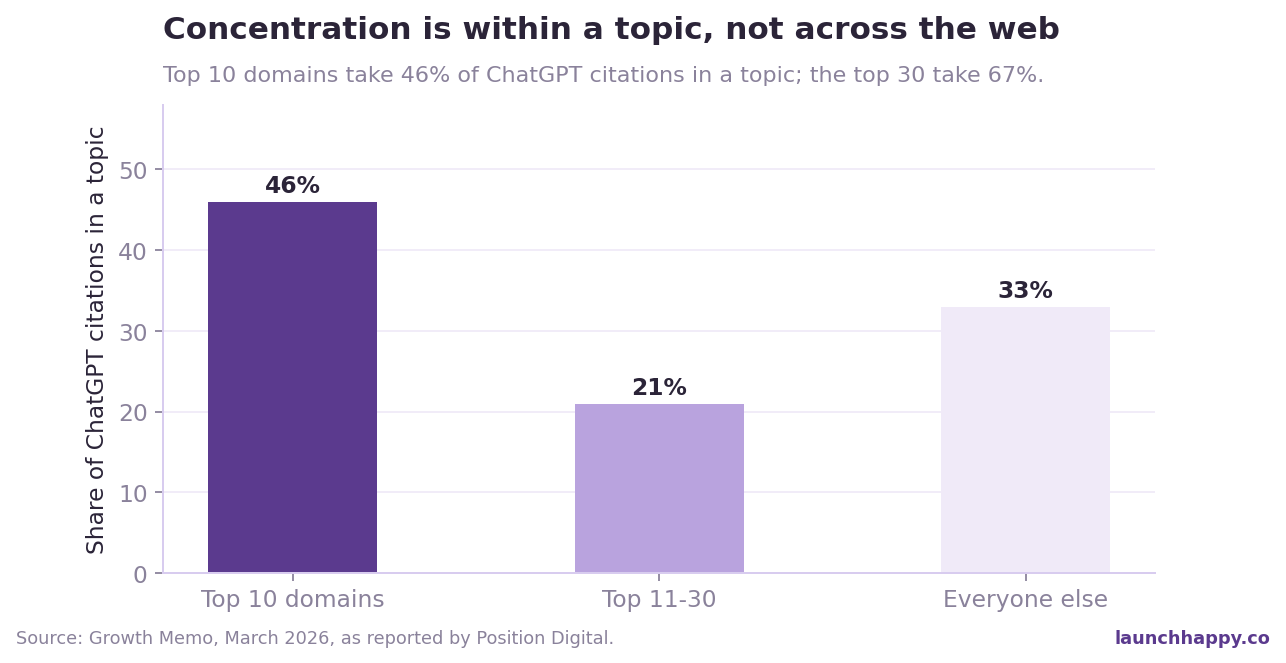
Figure 9: Concentration is within a topic, not across the web
Then ship schema, because it is correct. The mechanism behind all of this is set out in Why Does AI Cite Some Websites and Not Others?, the implementation detail in How to Add FAQ Schema to a Website (Step by Step), the format itself in What Is JSON-LD Structured Data? A Plain-English Guide, and the priority order across types in Which Schema Types Matter Most for AI Search?.
How to test this yourself
You do not have to take anyone's word for it, and given that only about 14% of marketers currently track AI search performance at all [19], testing puts you ahead of most of the field.
Freeze a question set. Twenty-five questions your customers actually ask, written down and never edited. The moment you change the questions between runs, you are measuring your phrasing rather than your visibility.
Record a baseline. Run every question across the platforms you care about, several times each — answers vary between runs — and record which domains are cited.
Change one thing. Ship schema across a defined set of pages and change nothing else.
Re-run the identical set. Same questions, same platforms, same number of repeats.
Expect engine-level differences. Semrush's 126-million-prompt study found only 36 brands maintained top-100 visibility across all four major platforms, and that ChatGPT cites roughly 15 sources per response while Gemini cites around 3 [15]. Report per platform, not as one blended score.
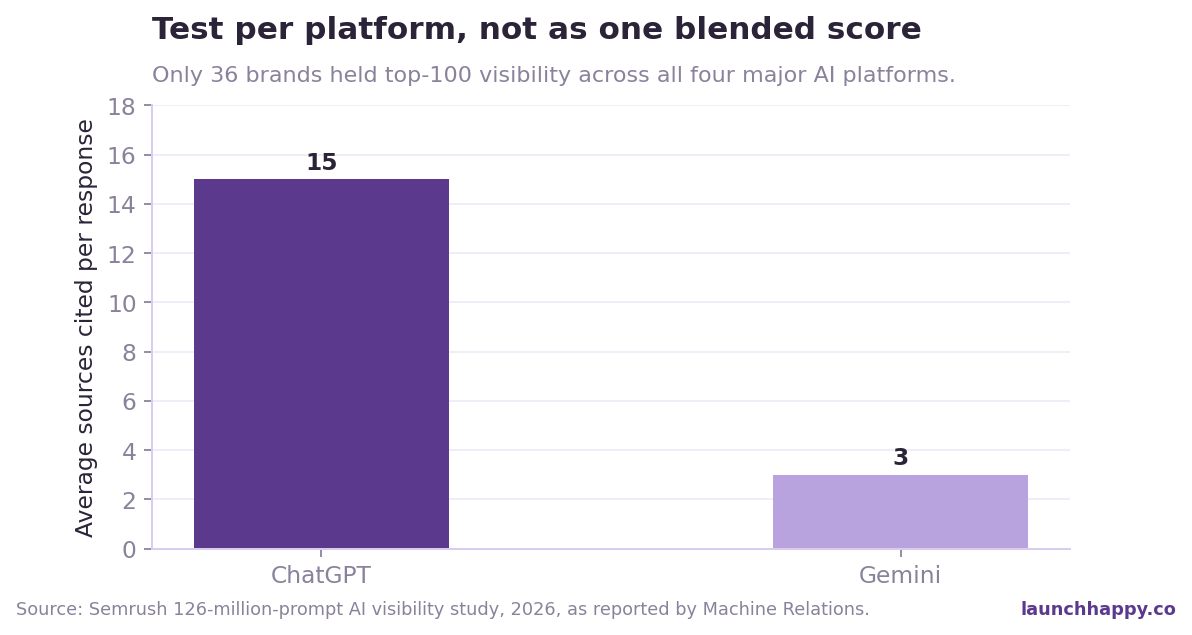
Figure 10: Test per platform, not as one blended score
Expect noise, and repeat enough to see through it. Assistants do not return identical answers to identical questions. Running each question once and comparing single results measures variance, not change. Several runs per question per platform is the minimum that lets you distinguish a real movement from the system's own instability.
Accept a null cleanly if you get one. The point of a test is that it can come out either way. If markup does not move your numbers, that is a useful, money-saving result — and it matches the best available published evidence [2][10][31]. A test that can only confirm the thing you already paid for is not a test.
If markup moves your numbers, you will have better evidence than anything published. If it does not, you will have saved yourself a retainer.
One warning about the arithmetic, because it is the most common way this kind of test flatters itself. Never edit the question set between runs, and never compare a score from one question set to a score from another. Two panels of questions produce two different denominators, and a change in denominator will look exactly like a change in performance — usually in the flattering direction. If you need to measure a new topic, that is a new baseline with its own starting figure, not a continuation of the old one.
Frequently asked questions
Does ChatGPT read schema markup? OpenAI has not published guidance stating that ChatGPT's retrieval uses third-party schema.org markup as a ranking or citation signal. There is no public confirmation either way.
Does schema markup help with AI search generally? Google states no special schema.org structured data is needed for its AI features [2]. No other major provider has published guidance claiming it helps. Program research found JSON-LD on zero of 49 measured cited pages [31].
Should I remove my schema markup then? No. It is cheap, valid and useful for parsing, identity and non-Google consumers, and Google has said unused structured data does not cause problems for Search [5]. The argument here is against over-claiming its effect, not against having it.
What about FAQ schema specifically? FAQ rich results no longer appear in Google Search as of 7 May 2026 [1]. FAQPage remains a valid Schema.org type. A controlled SearchPilot test found removing FAQPage markup produced no statistically significant traffic change [25].
Is llms.txt worth adding for ChatGPT? Zyppy scored llms.txt at 2.0 out of 10 with no credible evidence it influences AI citations [10], and Google states you do not need to create new machine-readable or AI text files [2].
What actually gets me cited by ChatGPT? On the available evidence: being retrievable, ranking reasonably well, answering the question in the opening block, titling the page as the question, and writing in short extractable blocks [2][10][11][32].
Why does my competitor get cited when I don't? Most often retrievability, position of the answer within the page, or topical coverage rather than markup. Check whether they rank across a cluster of related questions while you rank for one [2][10][17].
Does adding schema risk anything? Only if it describes content that is not on the page. Google's guidelines prohibit marking up content not visible to readers and require markup to accurately represent the page [4]. Accurate markup carries no penalty risk, and Google has said unused structured data does not cause problems for Search [5].
Is it worth paying an agency for schema implementation? It is worth paying for perhaps an hour of correct implementation. It is not, on the current published evidence, worth paying for as an AI-visibility service. Ask any supplier what evidence they have that markup moves AI citations, and compare their answer to Google's own statement that no special structured data is needed [2].
Does Perplexity use schema? Perplexity has not published guidance saying its retrieval treats third-party structured data as a citation signal. As with ChatGPT, there is no public confirmation either way.
If schema does not drive citations, why does my agency keep recommending it? Usually because the advice predates AI search and was carried across without its evidence base, and because implementation is easy to scope and invoice while "answer your customers' questions better" is not. Neither reason makes it wrong to ship markup. Both make it wrong to price it as an AI-visibility service.
What single change would help most? Confirming you are retrievable — crawling allowed in robots.txt and at the CDN, and no nosnippet directive suppressing your snippets [2][10]. It takes minutes, and if it is broken nothing else you do can work.
How long before schema changes anything? Google notes it may take several days after publishing for a page to be found and crawled [1], and retrieval sits downstream of that. But since there is no strong evidence schema drives citations, the honest answer is that you should not expect a citation change from markup alone.
Written by the LaunchHappy GEO team. LaunchHappy measures AI visibility against a frozen question set and reports what changed. See the GEO Report.
References
[1] Google Search Central, FAQ (FAQPage, Question, Answer) structured data, updated 8 May 2026 — https://developers.google.com/search/docs/appearance/structured-data/faqpage [2] Google Search Central, AI features and your website, updated 10 December 2025 — https://developers.google.com/search/docs/appearance/ai-features [3] Google Search Central, Intro to how structured data markup works — https://developers.google.com/search/docs/appearance/structured-data/intro-structured-data [4] Google Search Central, General structured data guidelines, updated 10 July 2026 — https://developers.google.com/search/docs/appearance/structured-data/sd-policies [5] Google Search Central Blog, Changes to HowTo and FAQ rich results, 8 August 2023 — https://developers.google.com/search/blog/2023/08/howto-faq-changes [6] Aggarwal, Murahari, Rajpurohit, Kalyan, Narasimhan & Deshpande, GEO: Generative Engine Optimization, KDD '24, 24 August 2024 — https://dl.acm.org/doi/10.1145/3637528.3671900 [7] Puerto et al., C-SEO Bench, 2025 — https://arxiv.org/pdf/2606.20065 [10] Cyrus Shepard / Zyppy, AI Citation Ranking Factors, 7 May 2026, as reported by PPC Land — https://ppc.land/23-factors-that-actually-get-your-content-cited-by-ai-search-engines/ [11] Zyppy / Authoritas (2025), positional bias in LLM citations, as reported by AI Thinker Lab — https://aithinkerlab.com/generative-engine-optimization-2026/ [15] Semrush 126-million-prompt AI visibility study (2026), as reported by Machine Relations — https://machinerelations.ai/research/ai-search-citation-factors-2026 [17] Growth Memo (March 2026), ChatGPT citation concentration by domain, as reported by Position Digital — https://www.position.digital/blog/ai-seo-statistics/ [18] ConvertMate, AI Visibility Study (80 million citations, 10,000+ domains), as reported by SLT Creative — https://www.sltcreative.com/ai-seo-statistics [19] Conductor (2026), share of marketers tracking AI search performance, as reported by AI Thinker Lab — https://aithinkerlab.com/generative-engine-optimization-2026/ [24] Matt G. Southern, Google Drops FAQ Rich Results From Search, Search Engine Journal, 10 May 2026 — https://www.searchenginejournal.com/google-drops-faq-rich-results-from-search/574429/ [25] SearchPilot controlled test of FAQPage markup removal, as reported in 2026 coverage of the deprecation — https://orangemonke.com/blogs/google-drops-faq-rich-results-from-search/ [27] Google Search Central, Understand the JavaScript SEO basics — https://developers.google.com/search/docs/crawling-indexing/javascript/javascript-seo-basics [29] Schema.org, FAQPage — https://schema.org/FAQPage [30] Google Search Central, Organization structured data — https://developers.google.com/search/docs/appearance/structured-data/organization [31] LaunchHappy GEO Certified program research, citation-models.md — first-party measured research, 2026 [32] LaunchHappy Panel B measured baseline, 26 July 2026 (300 measured answers, 2,026 cited references) — first-party